



Chloride Channel
Cl− Channels
Chloride channels belong to a superfamily of ion channels that permit passive passage of anions, mainly chloride, across cell membrane. Chloride channels perform important roles in the regulation of cellular excitability, in transepithelial transport, cell volume regulation, and acidification of intracellular organelles. Chloride channels represent a group of potential drug targets.
The chloride channel protein (ClC) family comprises both chloride (Cl-) channels and chloride/proton (Cl-/H+) antiporters. In prokaryotes and eukaryotes, these proteins mediate the movement of Cl- ions across the membrane. In eukaryotes, ClC proteins play a role in the stabilization of membrane potential, epithelial ion transport, hippocampal neuroprotection, cardiac pacemaker activity and vesicular acidification.
All Product Categories
-
Chloride Channel Related Products (125)
Related Products (125)

-
Antibodies (3)
-
Adjudin
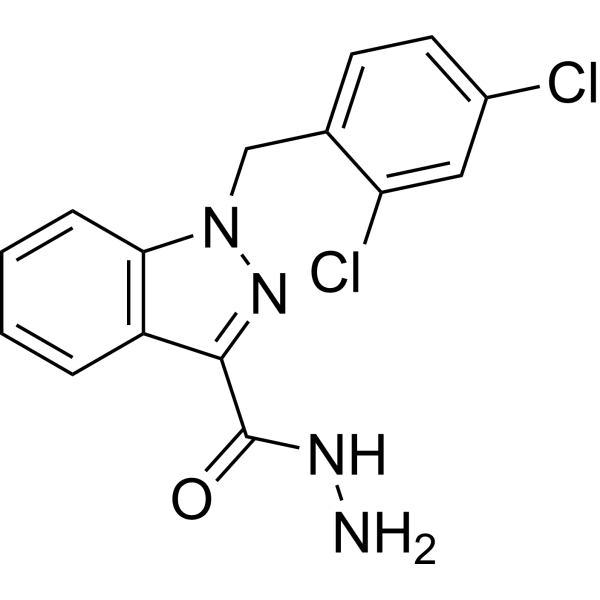 0 ImagesSynonyms: AF-2364Adjudin is an extensively studied male contraceptive with a superior mitochondria-inhibitory effect. Adjudin is also a potent Cl- channel blocker.
-
Fenamic acid
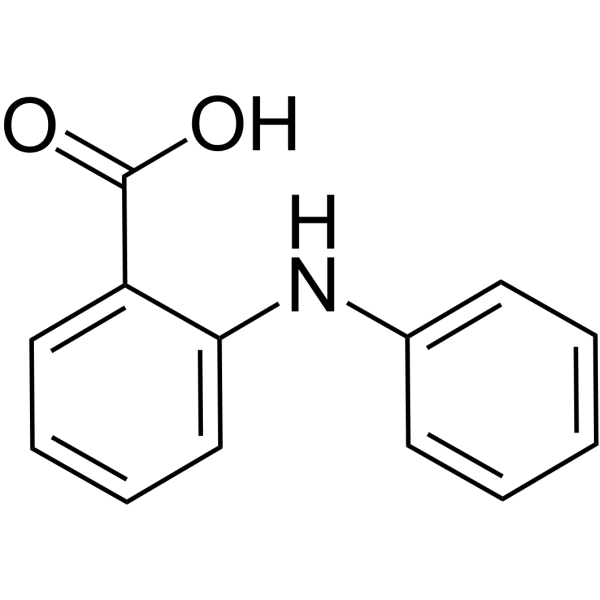 0 ImagesSynonyms: N-Phenylanthranilic acidFenamic acid (N-Phenylanthranilic acid, NPAA) is an orally active chloride channel blocker. Fenamic acid is the basic constituent of non-steroidal anti-inflammatory agents (NSAIA), and derives into mefenamic, tofenacin, flufenac acid and melofenac acid. Fenamic acid also acts as antibacterial and analgesic agent-.
-
ANO1-IN-4
 0 ImagesANO1-IN-4 (Compound 10bm) is a reversible inhibitor for calcium-activated chloride channel transmembrane protein 16A (TMEM16A, also known as ANO1) with an IC50 of 0.030 µM. ANO1-IN-4 exhibits good metabolic stability in rat liver microsomes. ANO1-IN-4 inhibits spontaneous contraction in mouse isolated ileum.
-
Chlorotoxin TFA
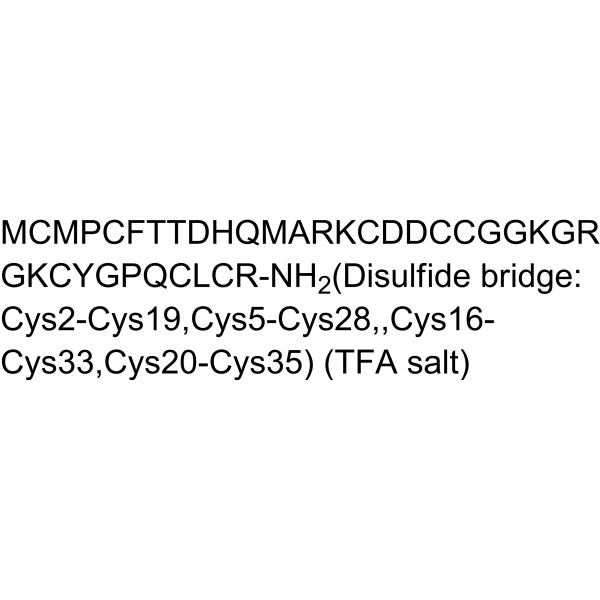 0 ImagesCat. No.: HY-P0173BChlorotoxin TFA is a peptide isolated from the venom of the scorpion Leiurus quinquestriatus, acts as a chloride channel blocker. Anti-cancer activity.
-
Stepronin
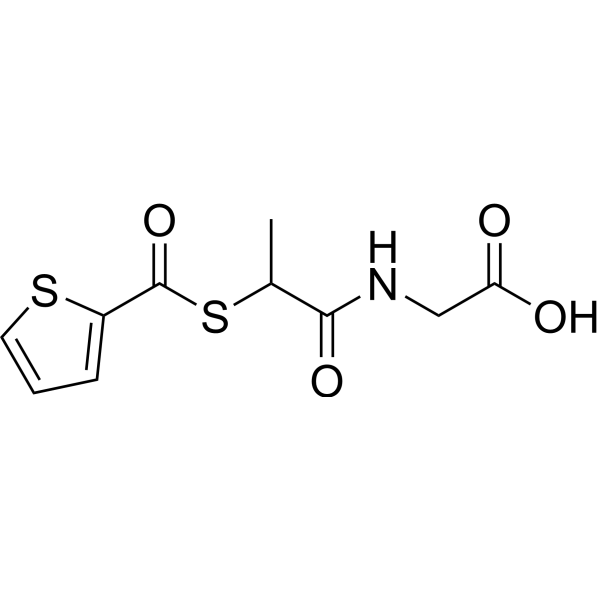 0 ImagesSynonyms: Prostenoglycine; TTPG; TiaseStepronin (Prostenoglycine) is an orally active expectorant (inhalation administration is preferable to oral administration). Stepronin inhibits airway secretion in vitro by reducing Cl- secretion from epithelial cells and mucus glycoprotein secretion from submucosal glands.
-
1-Anthramine
 0 ImagesSynonyms: 1-Aminoanthracene1-Anthramine (1-aminoanthracene) is a fluorescent general anesthetic. potentiates GABAergic transmission with Kd = 0.1 mM, for binding to the general anesthetic site in horse spleen apoferritin (HSAF). 1-Anthramine fluorescence is enhanced when bound to HSAF. 1-Anthramine potentiates chloride currents elicited by GABA. 1-Anthramine can reversibly inhibit the movement of Xenopus laevis, with an EC50 value of 16 μM.
-
Tigolaner
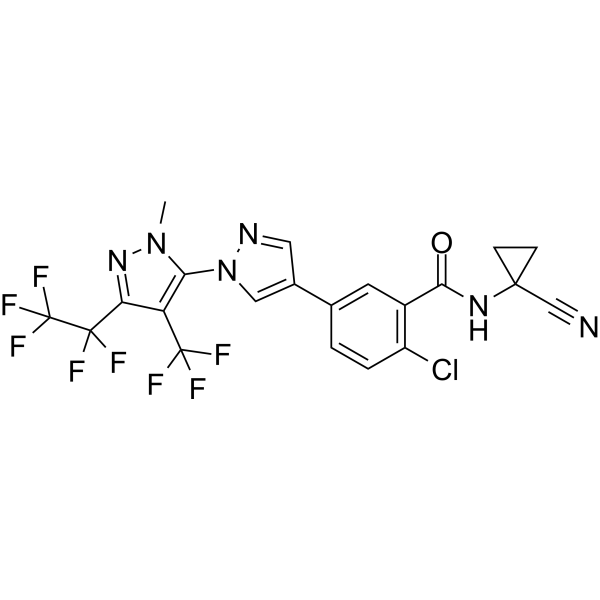 0 ImagesSynonyms: BAY-1272858Tigolaner (BAY-1272858) acts on γ-aminobutyric acid (GABA) and glutamate-gated chloride channels. Tigolaner has antiparasitic activity.
-
Niflumic acid (Standard)
 0 ImagesNiflumic acid (Standard) is the analytical standard of Niflumic acid. This product is intended for research and analytical applications. Niflumic acid is a calcium-activated chloride channel blocker and COX-2 inhibitor with the IC50 value of 100 nM. Niflumic acid induces apoptosis through caspase-8/Bid/Bax pathway in lung cancer cells. Niflumic acide exhibits anti-tumor activity by affecting the expression of ERK1/2 and the activity of MMP2 and MMP9. Niflumic acid has orally bioactivity. Niflumic acid acts on rheumatoid arthritis.
-
GaTx2
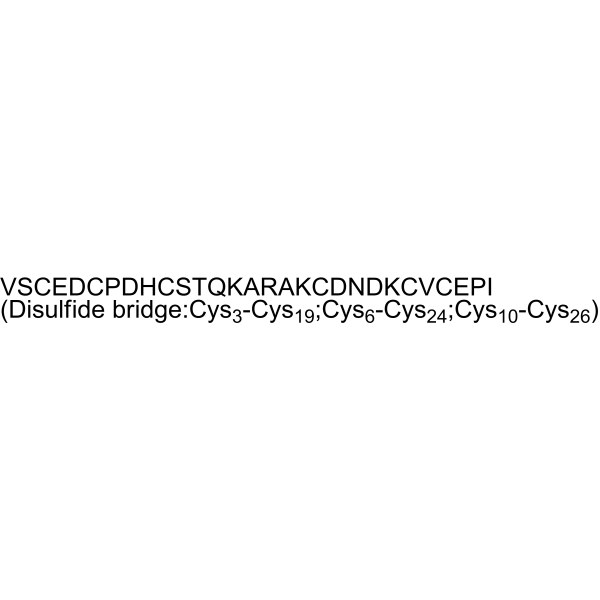 0 ImagesGaTx2 is a seletive and a high affinity inhibitor of ClC-2 channels with a voltage-dependent apparent KD of ∼20 pM. GaTx2 is a peptide toxin inhibitor from Leiurus quinquestriatus hebraeus venom. GaTx2 is useful in determining the role and the membrane localization of ClC-2 in specific cell types.
-
Flumethiazide
 0 ImagesFlumethiazide (NSC 44626) is an orally active diuretic agent. Flumethiazide has marked diuretic and natruretic effects with significant effects on Sodium, Chloride and water but not on potassium excretion. Flumethiazide can be used for cardiac diseases like essential hypertension research.
-
4''-Oxoavermectin B1a
 0 Images4''-Oxoavermectin B1a is a potentiator targeting GABA (γ-aminobutyric acid) and glutamate-gated chloride channels with insecticidal and acaricidal activities. 4''-Oxoavermectin B1a is promising for research of agricultural pests.
-
OADS
 0 ImagesOADS is a Chloride channel antiporter (ClC-ec1) inhibitor (IC50: 29 μM). OADS specifically inhibits the ClC-ec1 antiporter but not the ClC-1 channel. OADS can be used for research of osteoporosis and neurodegenerative and cardiovascular diseases.
-
Phenyl benzoate
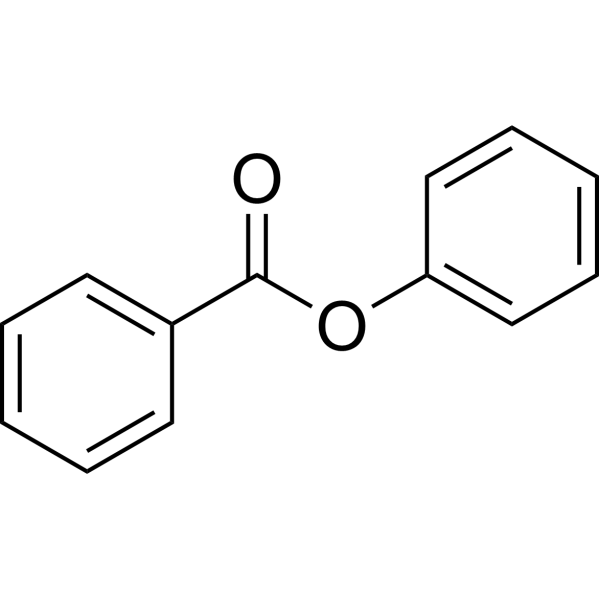 0 ImagesPhenyl benzoate is a benzoate ester obtained by the formal condensation of phenol with benzoic acid. Phenyl benzoate is a chloride transport blocker, inhibits Cl--dependent Glu accumulation into vesicles. Phenyl benzoate can be used as preservative in cosmetic products.
-
Flufenamic acid-13C6
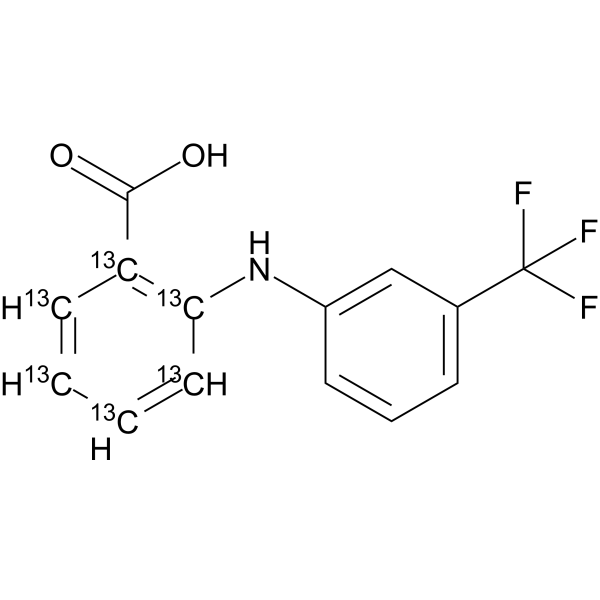 0 ImagesCat. No.: HY-B1221S1CAS No.: 1325559-30-5Flufenamic acid-13C6 is the 13C6 labeled Flufenamic acid. Flufenamic acid is a non-steroidal anti-inflammatory agent, inhibits cyclooxygenase (COX), activates AMPK, and also modulates ion channels, blocking chloride channels and L-type Ca2+ channels, modulating non-selective cation channels (NSC), activating K+ channels. Flufenamic acid binds to the central pocket of TEAD2 YBD and inhibits both TEAD function and TEAD-YAP-dependent processes, such as cell migration and proliferation.
-
Losigamone
 0 ImagesSynonyms: AO-33; (±)-Losigamone; LSGLosigamone (AO-33) is an orally active antiepileptic compound. Losigamone blocks sodium channel. Losigamone stimulates the neuronal chloride channel and enhance chloride influx. Losigamone potentiates GABA-mediated responses and reduces epileptiform activity induced by chloride channel antagonists. Losigamone can be used for epilepsy research.
-
Lubiprostone (hemiketal)
 0 ImagesSynonyms: RU-0211 (hemiketal); SPI-0211 (hemiketal)Lubiprostone (hemiketal) (RU-0211 (hemiketal)) is a selective chloride channel 2 (CLCN2) activator. Lubiprostone (hemiketal) is used to treat chronic idiopathic constipation and opioid-induced constipation by activating CLCN2 channels to increase chloride ion secretion in the intestine, thereby increasing intestinal fluid secretion and enhancing intestinal peristalsis. Lubiprostone (hemiketal) can be used in the study of chronic constipation and cancer.
-
Shikonin (Standard)
 0 ImagesSynonyms: C.I. 75535 (Standard); Isoarnebin 4 (Standard)Shikonin (Standard) is the analytical standard of Shikonin. This product is intended for research and analytical applications. Shikonin is a major component of a Chinese herbal medicine named zicao. Shikonin is a potent TMEM16A chloride channel inhibitor with an IC50 of 6.5 μM. Shikonin is a specific pyruvate kinase M2 (PKM2) inhibitor and can also inhibit TNF-α and NF-κB pathway. Shikonin decreases exosome secretion through the inhibition of glycolysis. Shikonin inhibits AIM2 inflammasome activation.
-
Niflumic acid-13C6
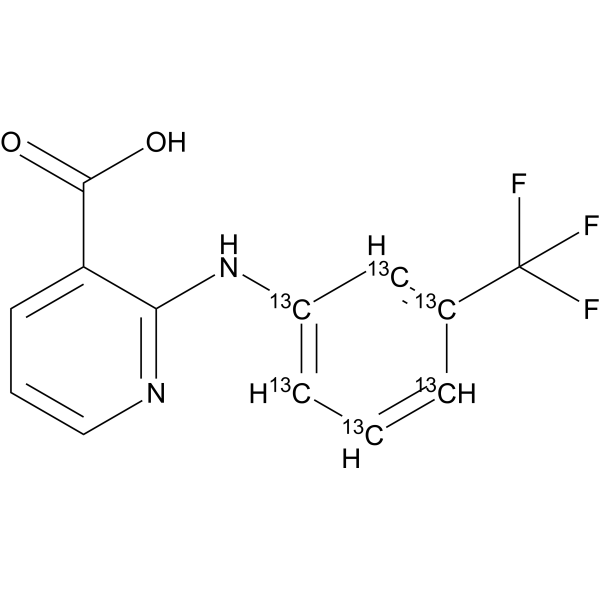 0 ImagesNiflumic acid-13C6 is the 13C6 labeled Niflumic acid. Niflumic acid, a Ca2+-activated Cl- channel blocker, is an analgesic and anti-inflammatory agent used in the treatment of rheumatoid arthritis.
-
Vanzacaftor-d4
 0 ImagesCat. No.: HY-145603SSynonyms: VX-121-d4Vanzacaftor-d4 (VX-121-d4) is the deuterium labeled Vanzacaftor (HY-145603). Vanzacaftor is an orally active noval corrector of Cystic fibrosis transmembrane conductance regulator (CFTR). Vanzacaftor improves processing and trafficking of CFTR protein as well as increases chloride transport in triple combined with Tezacaftor (HY-15448) and Deutivacaftor. Vanzacaftor-Tezacaftor-Deutivacaftor is safe and well tolerated, improving lung function, respiratory symptoms, and CFTR function with cystic fibrosis, which is promising for research in the field of cystic fibrosis diseases.
-
Anthracene-9-carboxylic acid-d9
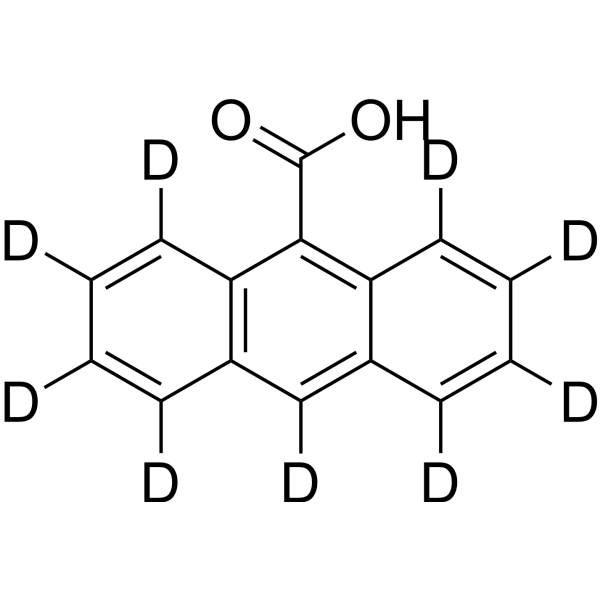 0 ImagesSynonyms: 9-Anthracenecarboxylic acid-d9Anthracene-9-carboxylic acid-d9 is the deuterium labeled Anthracene-9-carboxylic acid. Anthracene-9-carboxylic acid (9-Anthracenecarboxylic acid) is an anthracene derivative traditionally used to block and identify Ca2+-activated Cl- currents (CaCCs) in various cell types, like diverse smooth muscle cells, epithelial cells and salivary gland cells.




